
Why specialized servers are the new impact players
November 4, 2026The workloads are changing. The server is changing with them
Not long ago, most servers played similar roles. They provided the compute foundation for applications, databases, and business systems, while infrastructure teams focused on keeping them secure, available, and performing reliably. Today, that's changing.
Modern workloads are placing very different demands on infrastructure. Simulation and modeling require massive compute density and memory bandwidth. Virtualization demands greater consolidation and efficiency. AI applications depend on fast data movement, accelerator utilization, and the ability to generate insights in real time.
As organizations race to process information faster and turn data into intelligence, the server is no longer just supporting the workload. It's becoming an impact player.
This shift is being driven by two powerful forces reshaping enterprise computing: the race for speed and the race for insight. Together, they are moving the industry beyond one-size-fits-all infrastructure and toward a new generation of purpose-built platforms designed around the needs of specific workloads.
Enterprise computing is becoming more specialized.
From general-purpose to purpose-built
For a long time, a relatively small number of server architectures could support the vast majority of business workloads, with additional performance delivered through scale.
Today's workloads are changing that equation.
AI inferencing, simulation, analytics, visualization, accelerated computing, virtualization, and edge applications all place different demands on infrastructure. Some require exceptional compute density and memory bandwidth. Others depend on GPU acceleration, high-speed data movement, low latency, power efficiency, or deployment in space-constrained environments.
The challenge is no longer simply providing more infrastructure. It's identifying the constraint that limits workload performance and selecting an architecture designed to remove it.
As a result, infrastructure decisions are becoming less about server specifications and more about workload architecture. Organizations are increasingly choosing platforms based on the outcomes they need to achieve.
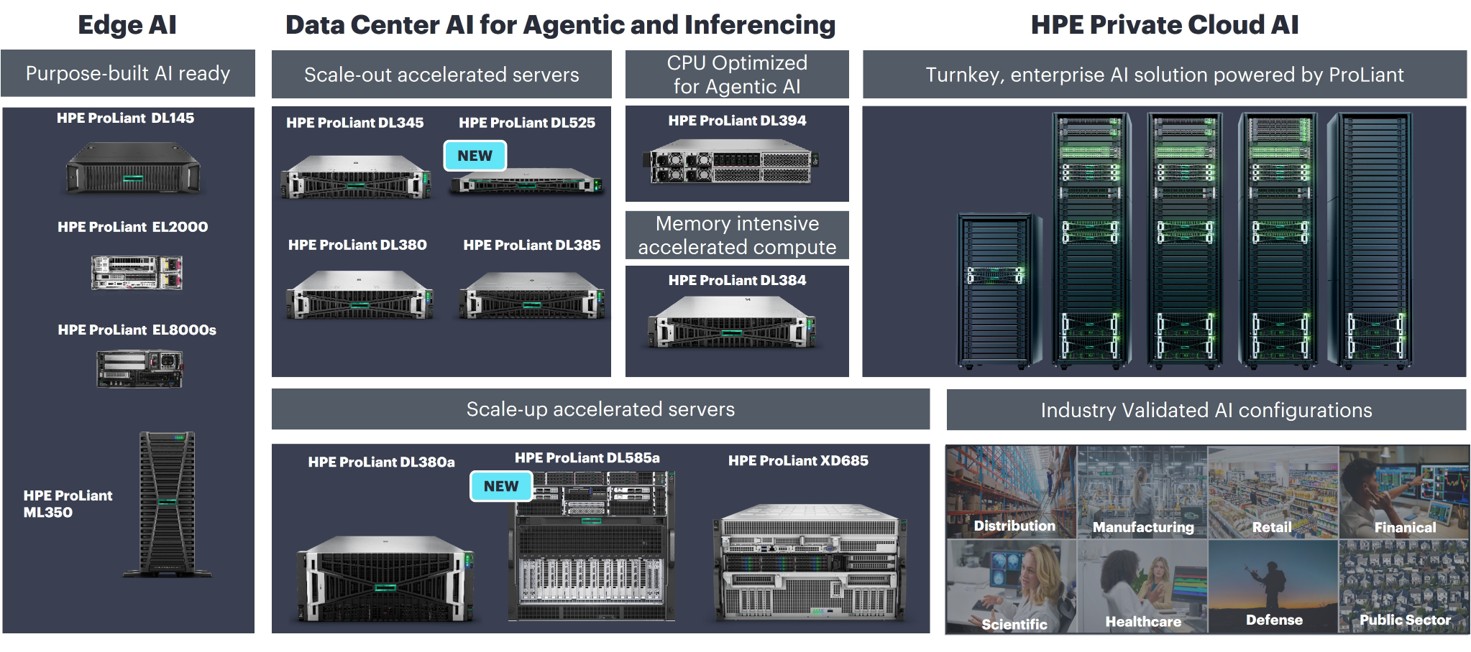
A simulation or analytics workload may benefit from a platform such as the HPE ProLiant DL525 Gen13 Server. Production AI inferencing may require the GPU density and scalability of the HPE ProLiant DL585a Gen13 Server. Accelerated AI and HPC workloads may demand the purpose-built architecture of the HPE ProLiant Compute DL394. Edge environments may require enterprise-class performance in locations where space, power, and environmental conditions matter, making platforms like the HPE ProLiant Compute EL2000 a natural fit.
That's why specialized servers are becoming impact players. They are designed to remove the constraints standing between a workload and the business outcome it's expected to deliver.
Specialization without operational fragmentation
More specialized infrastructure should not mean more fragmented operations.
As server architectures become more diverse, organizations still need a consistent way to secure, monitor, maintain, and support them. Without that consistency, performance gains can be offset by operational complexity.
That is where the broader HPE ProLiant foundation becomes important.
Whether organizations deploy a DL525 Gen13 for performance-intensive computing, a DL585a Gen13 for production AI, a DL394 for accelerated AI and HPC workloads, or an EL2000 at the edge, they should not have to adopt a different approach to security, lifecycle management, operations, or support for each platform.
This creates a common operational model across a growing portfolio of workload-optimized systems.
Organizations can select infrastructure designed for a specific purpose without creating separate management and security strategies for every deployment.
The future is likely to include a broader mix of specialized infrastructure: AI platforms, performance-intensive compute servers, virtualization hosts, edge systems, and purpose-built enterprise architectures. Success will depend on applying the right platform to the right workload while maintaining consistency across the environment.
A new chapter in enterprise computing
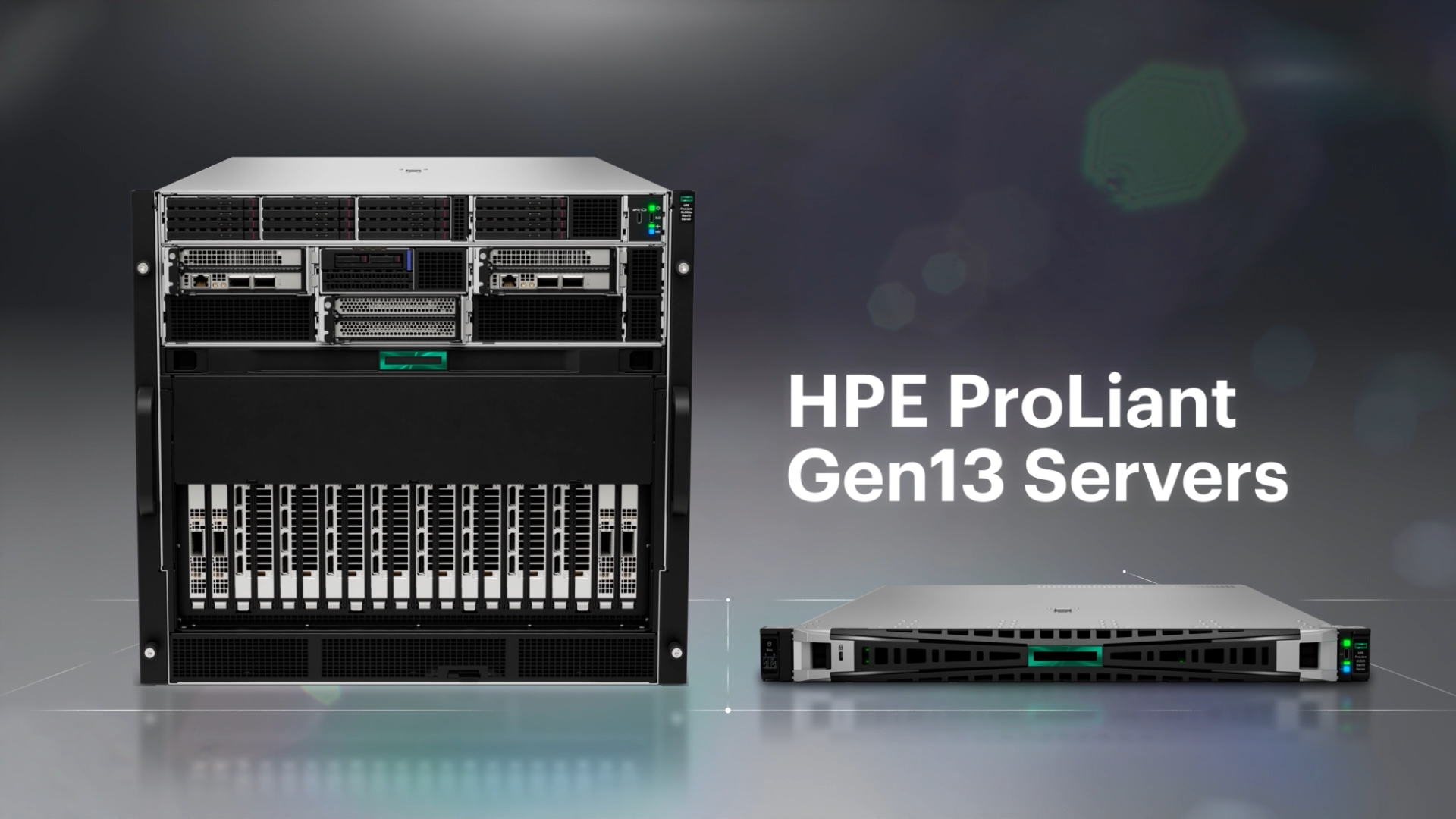
For more than three decades, ProLiant has helped organizations run some of their most important workloads. While those workloads have changed dramatically, one thing hasn't: when the outcome matters, the infrastructure behind it matters, too.
As workloads become more specialized, organizations are increasingly selecting architectures designed around specific outcomes rather than broad, general-purpose use cases.
Whether it's performance-intensive computing, production AI, accelerated computing, or edge deployments, the goal remains the same: remove the bottleneck between the workload and the outcome.
For a closer look at the latest additions to the HPE ProLiant portfolio, see my recent announcement blog
That's why specialized servers are becoming the new impact players.
Not because they can do everything but because they're built to excel at something that matters.
www.hpe.com/ProLiant
Related
The inference economy: why enterprise AI is moving closer to the data
Jul 22, 2026The rise of purpose-built compute for Edge AI
Sep 8, 2026Tokenomics - understanding the economics of enterprise AI
Jul 27, 2026